Heating Repair, Service & Installation
No heat in January is not a maintenance item, it is an emergency — for your comfort and for your pipes. We service and install the systems that actually heat northern New Jersey homes: gas and oil boilers, forced-air furnaces, steam and hot-water radiators, and baseboard.
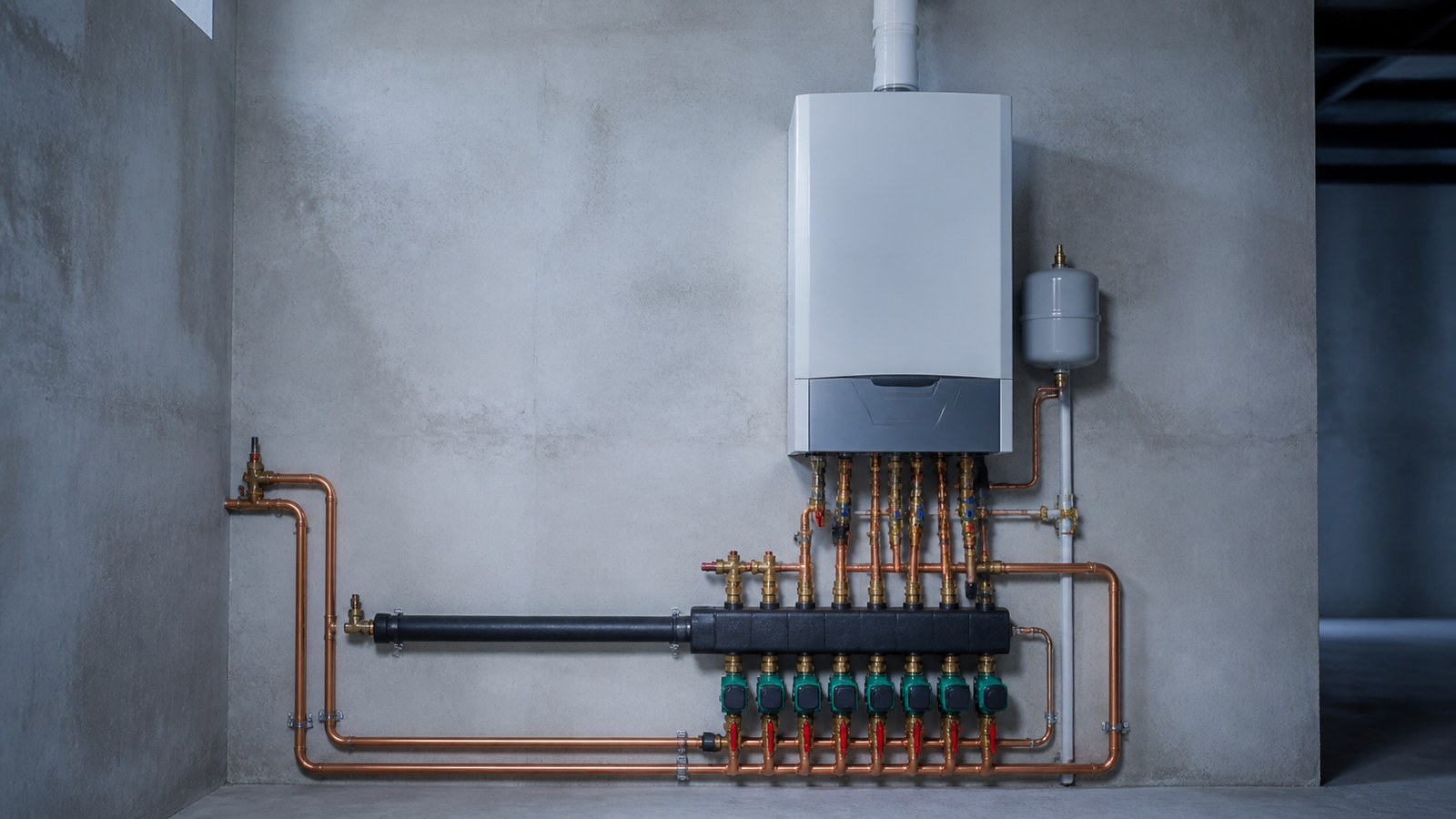
What we handle
- Emergency no-heat diagnosis and repair
- Gas and oil boiler repair, service, and replacement
- Forced-air furnace repair and installation
- Steam and hot-water radiator systems, including trap and valve work
- Baseboard heating repair and replacement
- Circulator pumps, zone valves, and aquastats
- Thermostat upgrades, including smart and multi-zone
- Annual heating tune-ups and safety inspections
- Radiant floor heat service
- Combustion safety and carbon monoxide testing
- Heat pump installation and service
- Ductwork inspection, repair and sealing
When the heat goes out
Before you call, two quick checks are worth making: confirm the thermostat is calling for heat and has working batteries, and confirm the system’s emergency switch — often a red plate at the top of the basement stairs — has not been flipped off. Those two account for a surprising share of no-heat calls.
If those are fine, call us. In freezing weather, an unheated house is a burst-pipe risk within hours, so no-heat calls go to the front of the line.
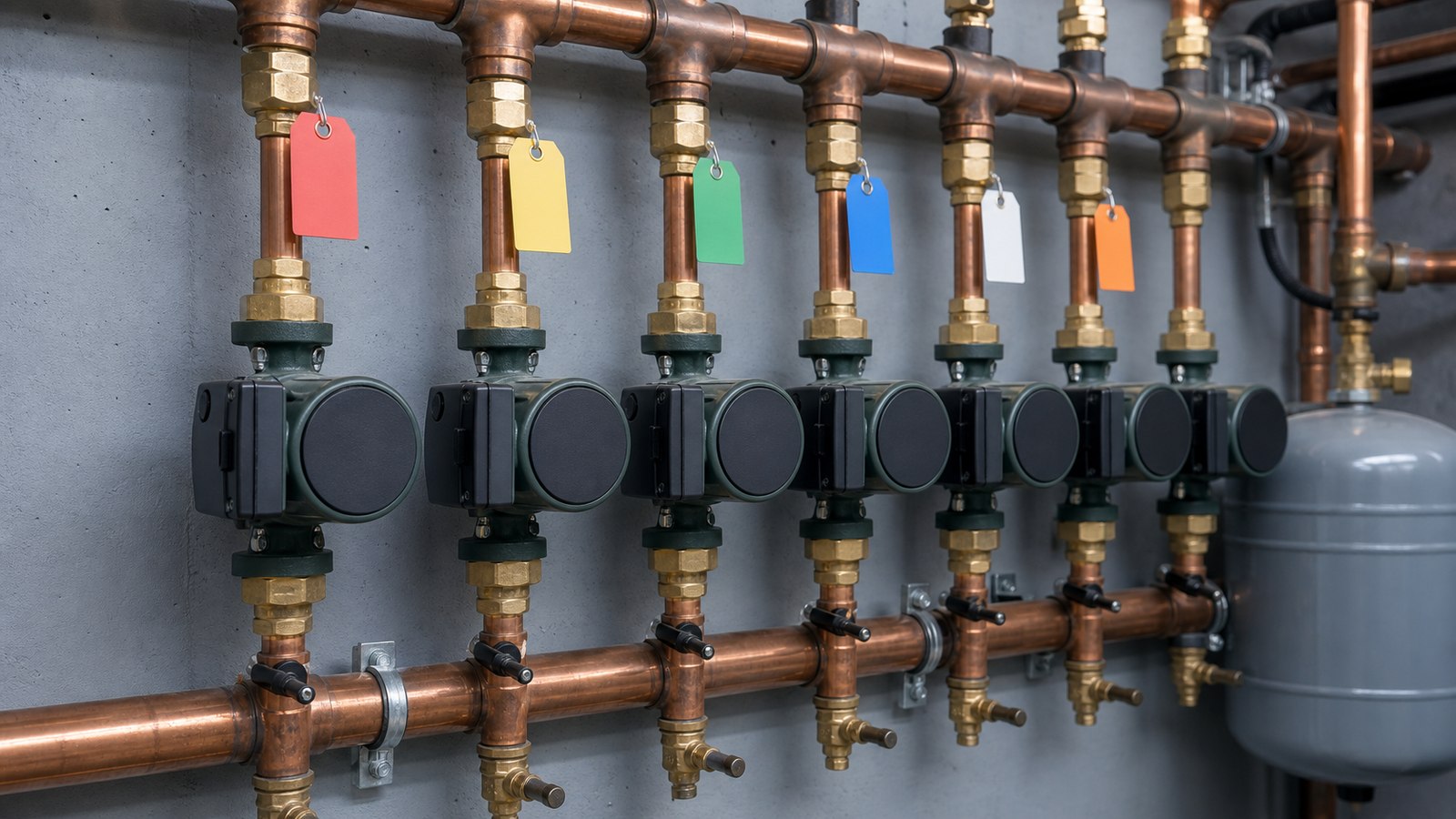
Steam and hot-water radiators
Plenty of homes in Ridgewood, Ramsey, and the older parts of Bergen County still run on their original radiator systems, and there is nothing wrong with that — a well-maintained steam system is durable and comfortable. But they are their own discipline, and not every contractor still works on them.
We do. Banging pipes, cold radiators at the end of a run, failed air vents, wet returns, and traps that have quit are all fixable, and usually far cheaper than the system replacement someone else may have quoted.
Annual service is not upselling
A heating tune-up is genuinely worth it, for one reason above all the efficiency talk: combustion safety. A cracked heat exchanger or a blocked flue puts carbon monoxide into the house. Testing for that once a year is not optional in our view.
The rest — cleaning, checking controls, verifying pressure and draft — is what keeps a system from failing on the coldest night of the year, which is when it will otherwise choose to fail.
Need this today?
Call (201) 675-0147. Emergency calls are answered 24/7, and we hold same-day slots for urgent work.
Where we do this work
We provide heating Repair, Service & Installation across all of North Jersey — Bergen, Passaic, Morris, Essex, Sussex, Hudson, Union and Warren counties. These are a few of the towns we work in most:
Not seeing your town? We cover far more than the towns listed above — see the full service area, or just call (201) 675-0147 and ask.
Heating Repair, Service & Installation — questions we get
Do you offer emergency heating service?
Yes. No-heat calls are handled on priority, including nights and weekends during heating season. Call (201) 675-0147 and describe what the system is doing — that helps us arrive with the right parts.
How long should a boiler last?
A well-maintained cast iron boiler can run thirty years or more; modern high-efficiency units typically run fifteen to twenty. Age alone is not a reason to replace. Repeated failures, a cracked section, or an unsafe heat exchanger are.
My radiators bang and clank. What causes that?
In a steam system it is almost always water trapped where steam is trying to travel, usually from radiators pitched the wrong way or a clogged return. It sounds alarming and it is fixable, often without major work. It is also worth addressing, since water hammer stresses the piping.
Should I replace my boiler with a high-efficiency model?
Sometimes. High-efficiency condensing units genuinely cut fuel use, but they require different venting and a condensate drain, and they are less forgiving of neglect. If your existing system is sound, keeping and maintaining it is often the better financial call. We will run the comparison honestly rather than defaulting to the bigger sale.