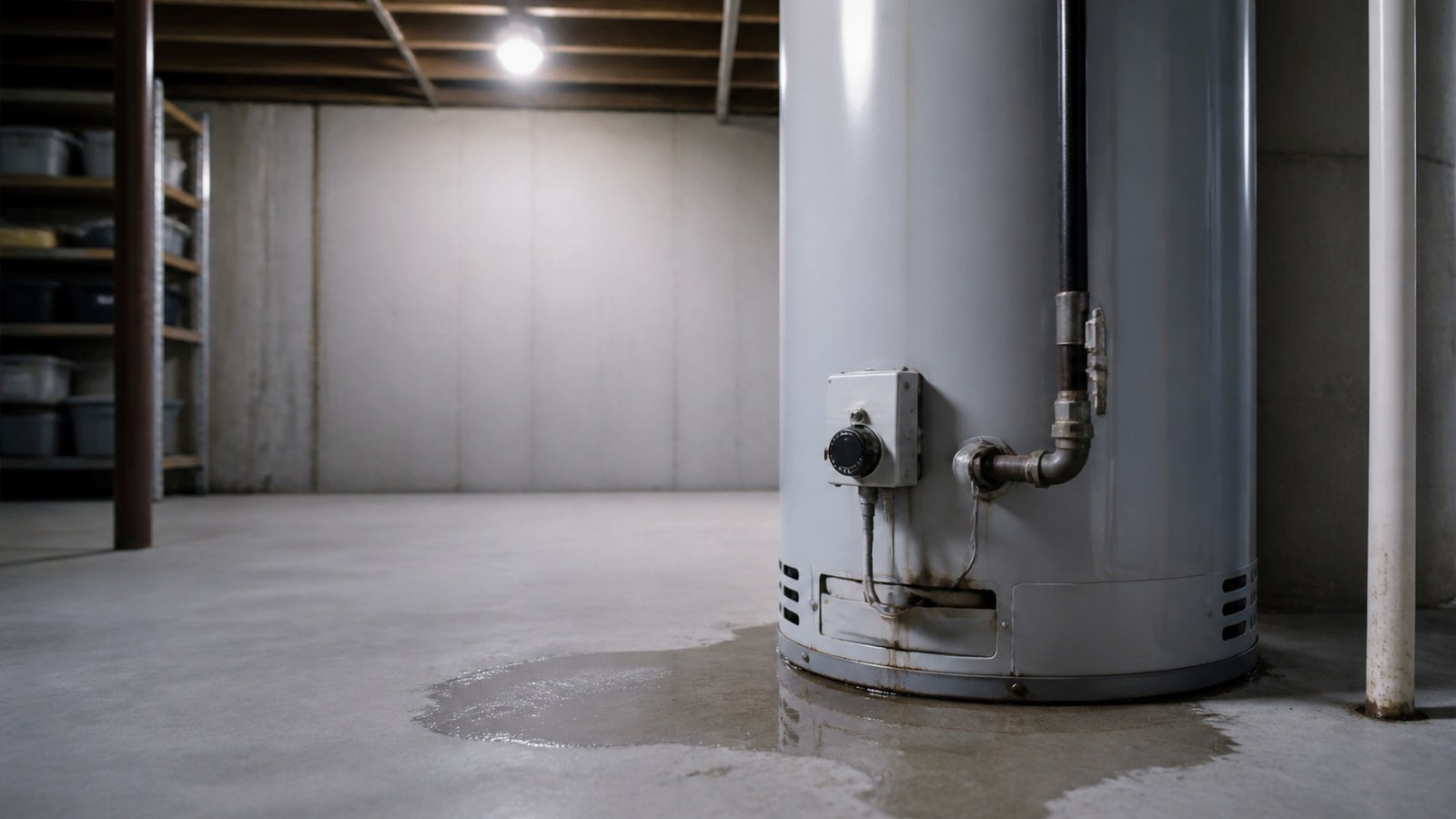
Water heaters almost always warn you before they fail. Catching those signals is the difference between a scheduled replacement and forty gallons across your basement floor.
1. Rusty or discoloured hot water
Run the hot tap first thing in the morning. If the water comes through tinted brown or orange and the cold side is clear, the corrosion is inside your water heater, not in the municipal supply.
What that usually means is the sacrificial anode rod has been consumed. The anode is a length of magnesium or aluminium designed to corrode instead of the steel tank. Once it is gone, the tank lining is what corrodes next — and the tank is not repairable.
Caught early, replacing the anode rod is an inexpensive job that can add years of life. Caught late, you are buying a heater.
2. Rumbling, popping or knocking while heating
That noise is sediment. Minerals settle out of the water and form a layer on the bottom of the tank; when the burner fires, water trapped beneath that layer boils and forces its way up through it.
Sediment matters for three reasons: it insulates the burner from the water so you pay more for the same hot water, it creates hot spots that crack the glass lining, and it steadily reduces the usable capacity of the tank. Annual flushing prevents almost all of it.
Hard water makes this substantially worse, which is why we see it constantly in Mahwah, Ringwood and other areas with harder supply.
3. Hot water running out faster than it used to
If showers that used to be comfortable now turn cold early and nothing about your household has changed, the tank's effective capacity has shrunk — usually from sediment, sometimes from a failed lower heating element in an electric unit.
On an electric heater, a failed lower element is a genuinely worthwhile repair: the upper element still heats the top of the tank, so you get some hot water, just far less of it. That symptom is close to diagnostic on its own.
4. Any water around the base
Treat this as urgent. Check the obvious candidates first — the temperature and pressure relief valve, the drain valve, and the supply connections above the unit — because those are all repairable.
If water is genuinely seeping from the tank seam itself, the heater is finished. There is no repair for a corroded-through tank, and tanks rarely fail gracefully once they start. A 50-gallon release in a finished basement is a very expensive afternoon.
If you see this: shut off the water supply to the heater, turn a gas unit's control to off or kill the breaker on an electric one, and call us.
5. It is more than twelve years old
A standard tank heater lasts eight to twelve years in our area, less with hard water and no maintenance. You can read the manufacture date from the serial number on the label — most brands encode the year and week in the first four digits.
Age alone is not a reason to replace a working heater. It is a reason to stop deferring the decision, to know where the shutoff is, and to think about whether you would rather choose the replacement date yourself or have it chosen for you.
6. Repairs are stacking up
A thermostat, a thermocouple, an element — any one of those is a sensible repair on a heater under about eight years old. Three of them inside two years on a ten-year-old unit is the tank telling you something.
Our rule of thumb: if a single repair costs more than about half the price of replacement, and the unit is past eight years, replacement is usually the better spend. We will tell you which side of that line you are on rather than defaulting to the bigger invoice.
What to do about it
If your heater is showing one of the early signs — rumbling, slightly rusty water, shorter showers — get it flushed and have the anode checked. That is a modest job that frequently buys years.
If it is leaking from the tank, or it is over twelve and showing several signs at once, plan the replacement rather than waiting for it. Planned replacements happen on a weekday at a price you agreed. Emergency ones happen on a Sunday, wet.
Need a hand with this?
We cover all of North Jersey and answer emergency calls 24/7. Call (201) 675-0147 or send us the details.
Last updated February 17, 2026. Written by JM Plumbing, Heating & Cooling LLC, NJ Plumbing Lic. #8706.